

Weeks, not months.
An executive who has held the CEO and CFO seats, in yours within weeks. Documents are requested on day one, and the CEO gets a written readout by the end of week one.
Interim executive leadership
Interim executive leadership for banks and credit unions navigating transition, disruption or growth. ApexSpan steps in quickly, stabilizes the organization, maintains cadence and prepares the institution for its next chapter.
Start a conversationAn executive who has held the CEO and CFO seats, in yours within weeks. Documents are requested on day one, and the CEO gets a written readout by the end of week one.
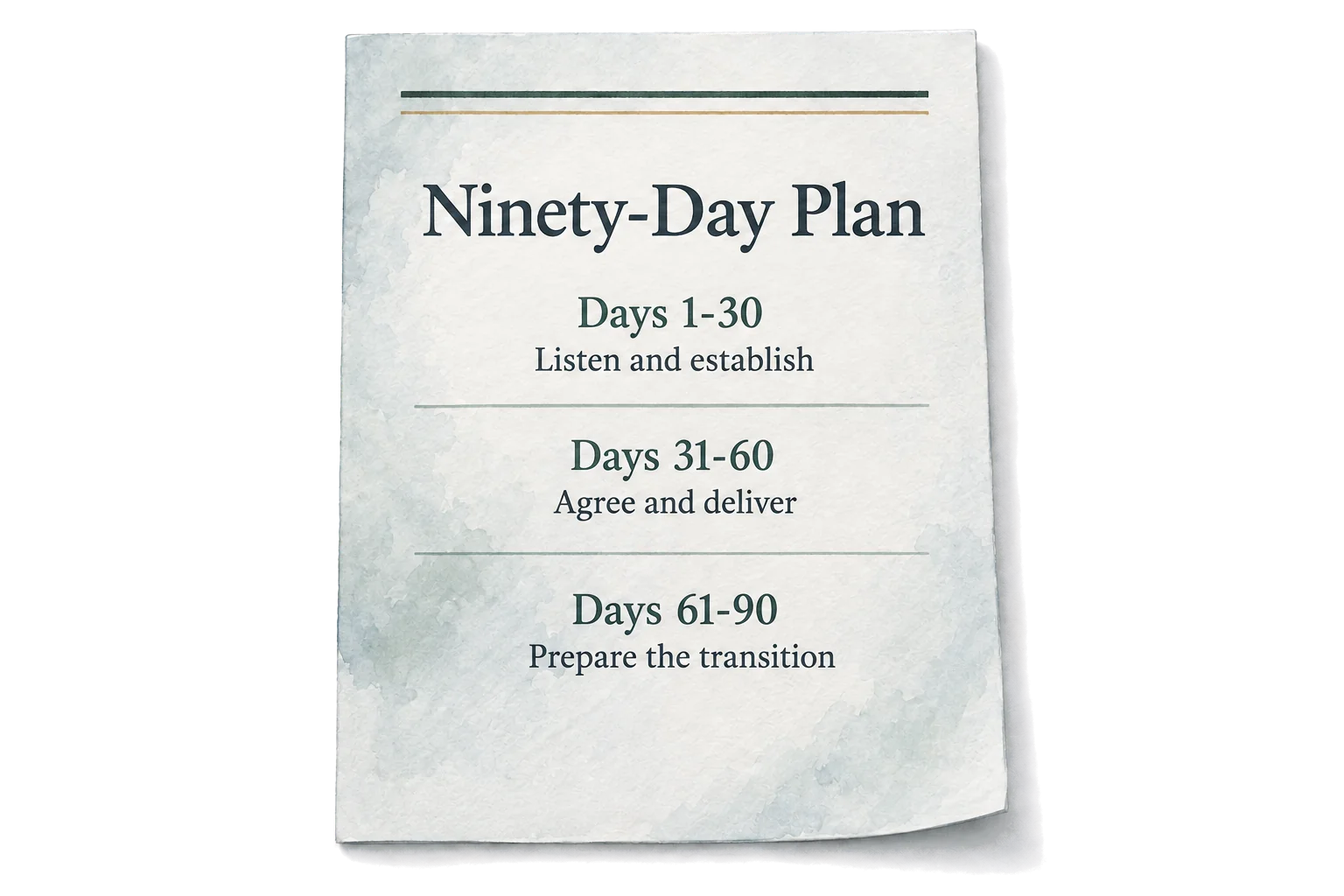
The first 30 days establish where the institution actually stands. The board then approves a written plan with owners, milestones and a weekly report against it.
Month-end close, board and committee packets, ALCO, audit and examiner responses keep moving from week one.
We help recruit the permanent executive, build their 90-day onboarding plan, and brief the board before we step out. They inherit a team, not a gap.
A leadership gap does not pause any of it, and a search done right takes months.


Month-end close continues. Board meetings continue. ALCO continues. Exams and audits continue. Decisions continue.
A leadership gap does not pause any of it, and a search done right takes months.
An experienced executive steps in within weeks, takes charge of that cadence, and strengthens the institution while the search for your permanent hire runs its course.
The term is ninety days with the end date in the scope before the first day.
The first thing an interim executive owes an institution is steadiness: a calm voice, a plain read on where things stand, and no surprises.

An interim period is a period of uncertainty for a board and an executive team.
What boards and chief executives tend to remember afterward is not any single fix. It is that the period felt under control.
At Kevin's most recent engagement the chairman and the CEO each came back to the same thing when it ended: the calming presence he brought to the board through the interim period.
That is the job, and the plan, the cadence, and the standard exist to make it visible.
In the first weeks the executive sets expectations directly with the CEO and the board: what will be done, in what order, and how it will be reported.
The first 30 days establish where the institution actually stands. The board approves a written plan with owners, milestones and weekly reporting.
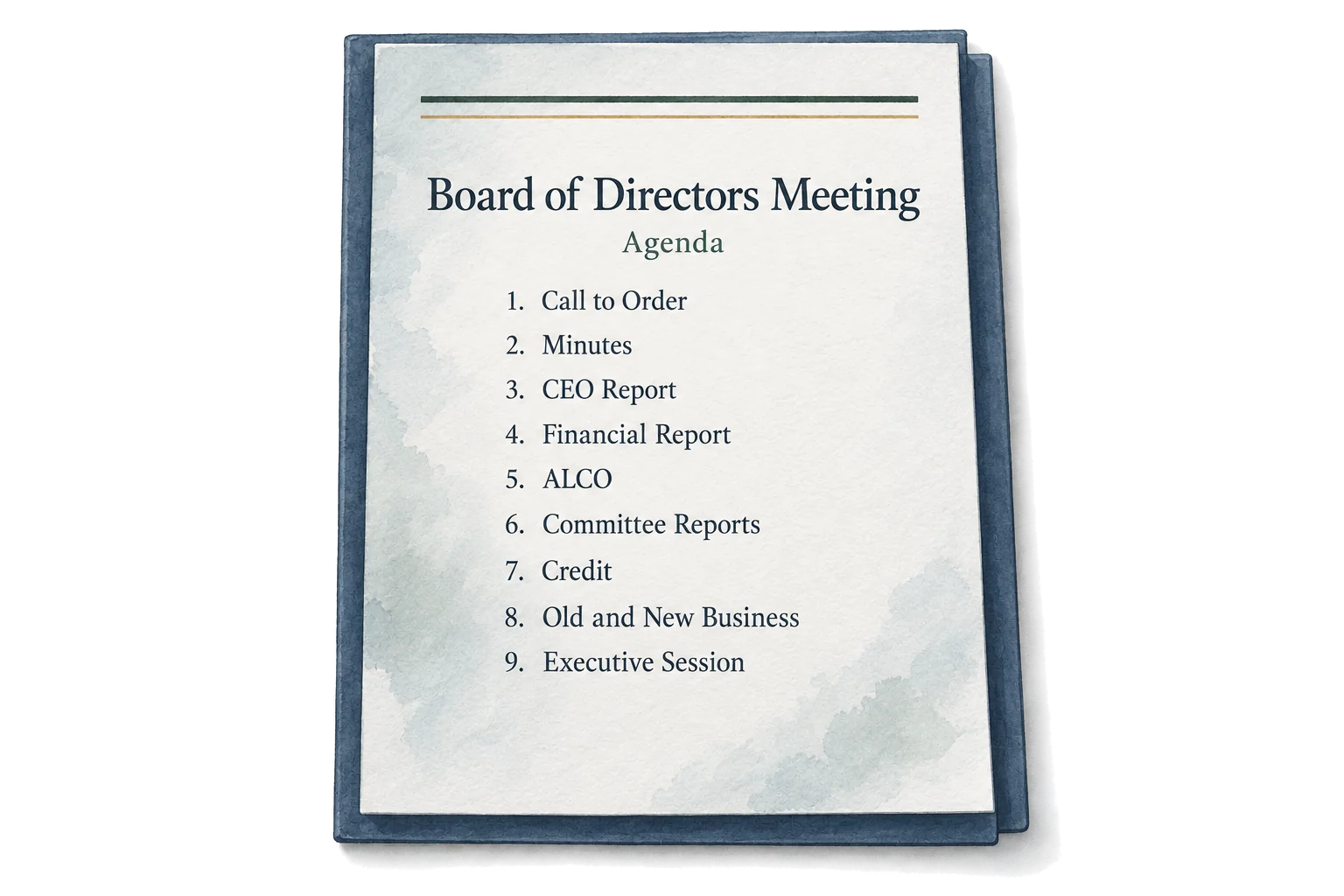
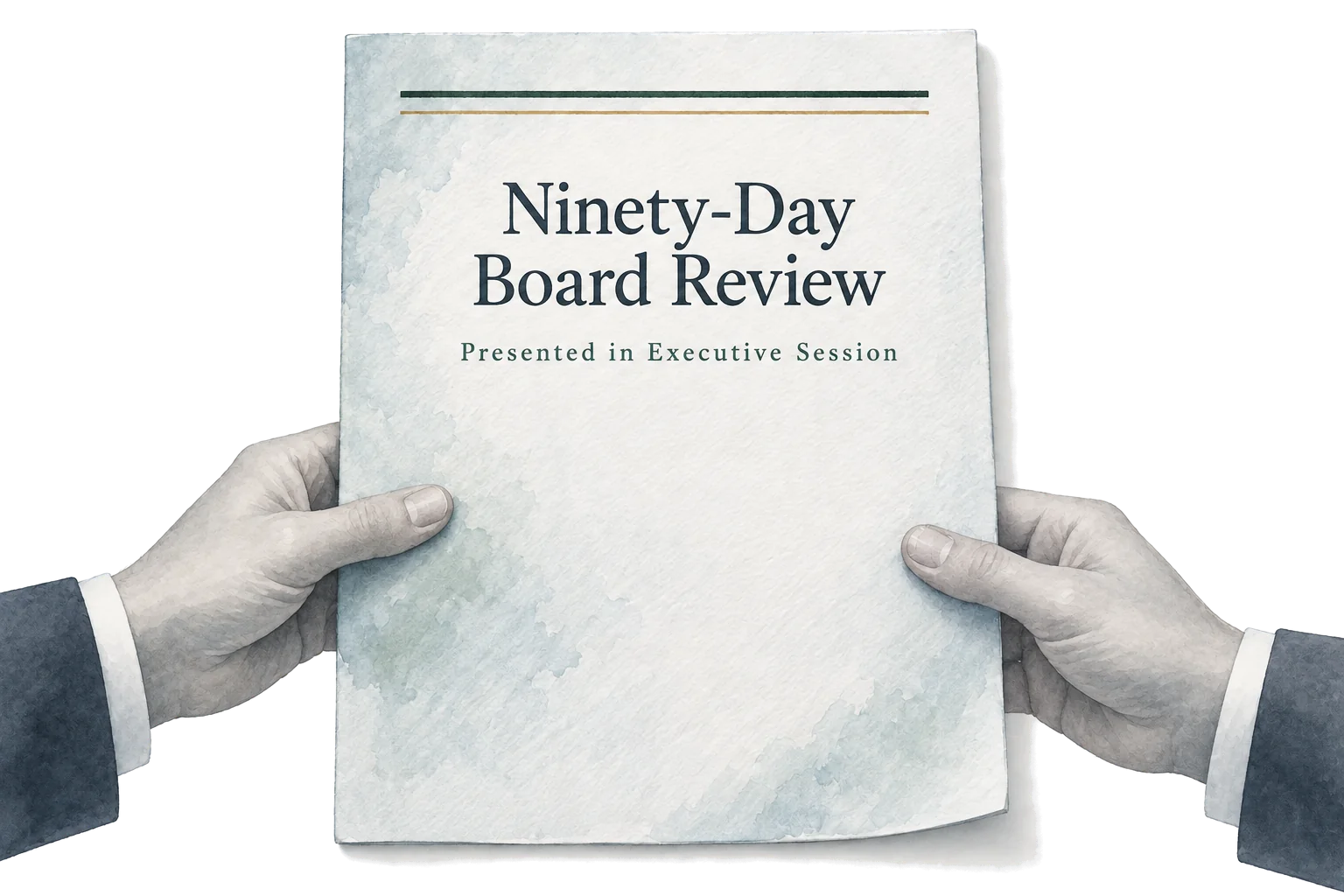
The CEO gets a written report every Friday. The board gets progress against the plan, and a 90-day close-out delivered in executive session.
Who sits across the table depends on the seat: an interim CEO sets those expectations with the board, and an interim CFO sets them with the CEO and the board together.
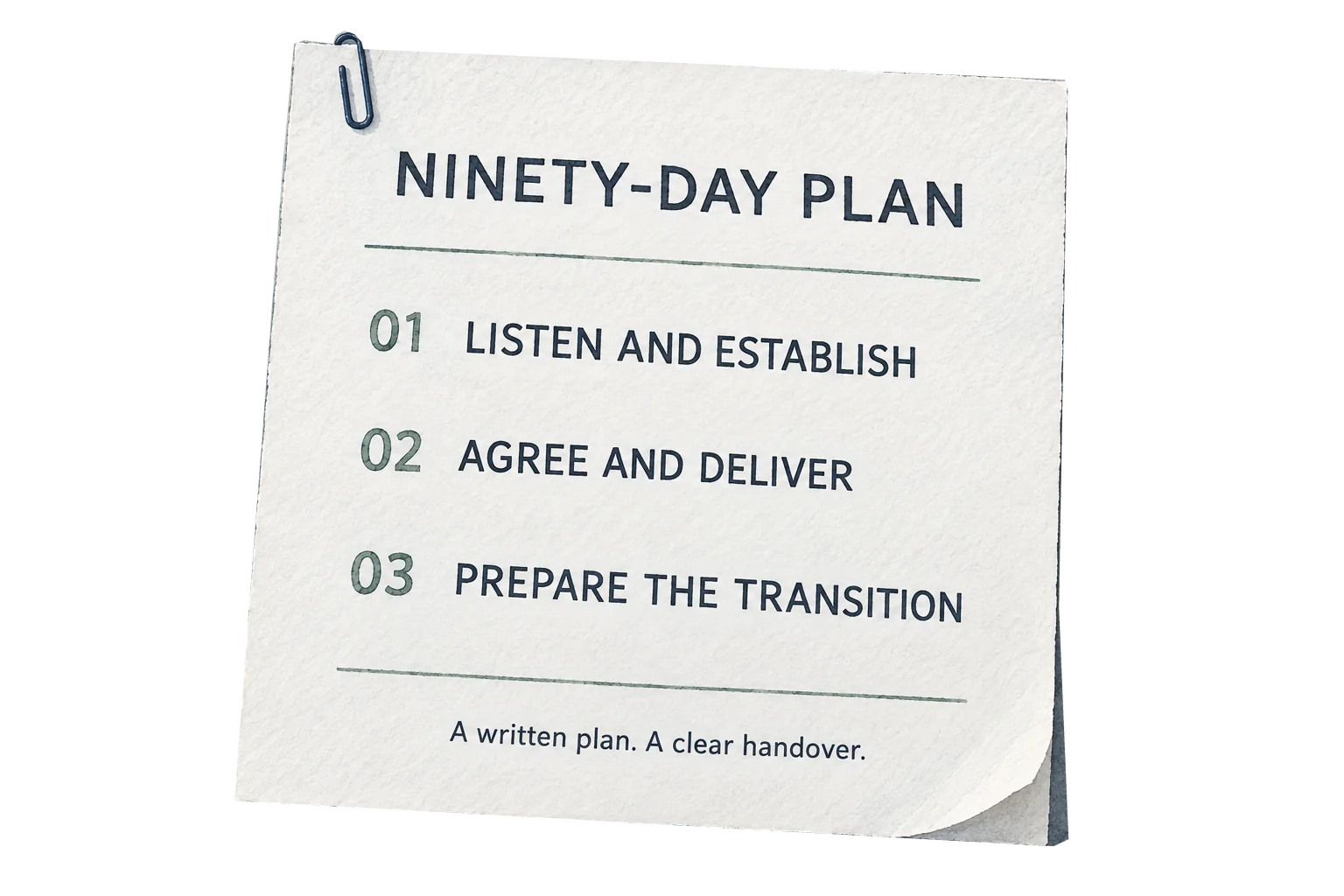
The work is then executed against that plan, with the same people informed throughout, to defined priorities and outcomes, and a deliberate transition at the end.
The permanent executive inherits a team, not a gap.
You know what you are getting before you sign, and you can check it every week after.
Start a conversationA federally insured financial institution approaching $1 billion in assets needed an interim CFO while it searched.
His most recent engagement was interim CFO at a federally insured financial institution approaching $1 billion in assets,
Your next executive may already be on your team, and one to two years of real executive work will show it.
Executive developmentIf you have a leadership gap, this is someone who can step in, take charge, keep the institution moving and leave you stronger when the permanent executive arrives.

